Markets Move in Cycles, Strategies Must Too
Imagine it is 2018. Mid-cap and small-cap stocks are under pressure, portfolios are bleeding, and investor confidence is shaken. Many choose to exit, locking in losses.
Fast forward to late 2021. Those same segments deliver a powerful rebound, rewarding investors who stayed invested or re-entered at the right time.
This contrast highlights a critical truth about investing: market cycles are inevitable, but poor decision-making during them is not.
The challenge is not avoiding volatility. It is navigating it with clarity.
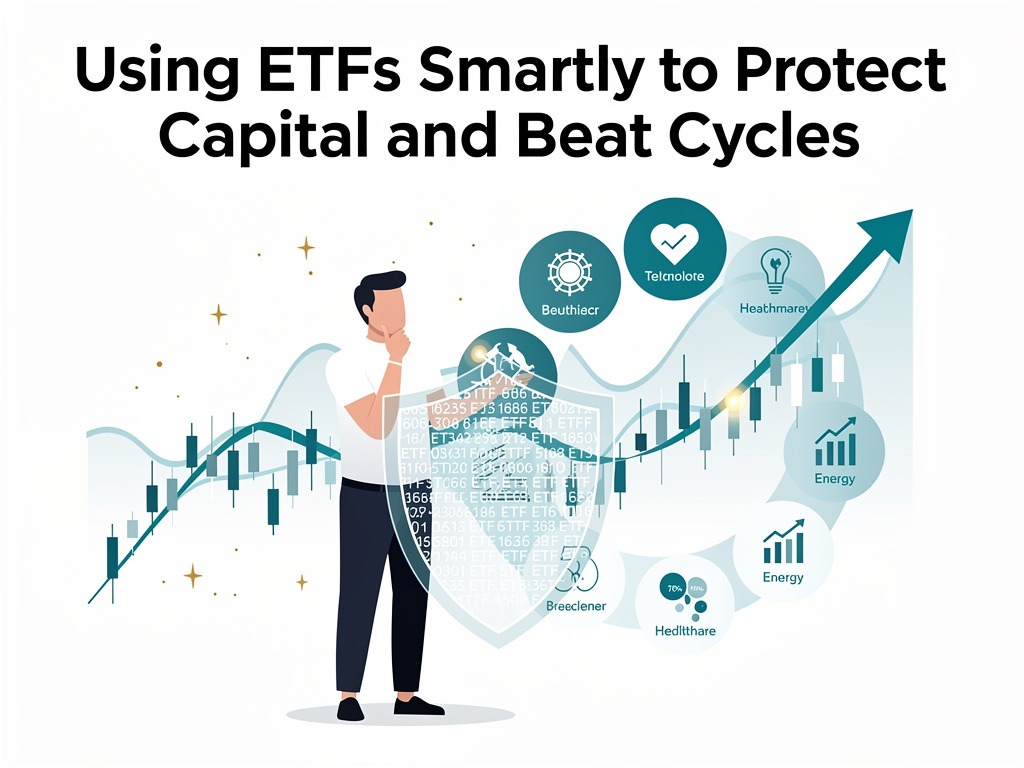
ETFs: Passive Instruments with Active Potential
Exchange Traded Funds are widely known for their simplicity. Buy an ETF, track an index, and hold it long term. This passive approach has its merits, but it is only half the story.
When used thoughtfully, ETFs can become powerful tools for:
- Capital protection during market excesses
- Participating in recoveries with controlled risk
- Improving long-term, risk-adjusted returns
ETFs are not limited to passive outcomes. Strategy determines results.
Sector ETFs: Opportunity with a Timing Risk
Sector-specific ETFs often attract attention after delivering strong returns. Technology, defence, energy, or banking cycles regularly dominate headlines.
However, sectors are inherently cyclical.
What performs exceptionally well today may underperform tomorrow. Investors who enter after a sector becomes popular often face muted returns or drawdowns.
The recent interest in defence sector ETFs is a perfect example. Without understanding valuation, earnings cycles, and capital flows, investors risk entering too late.
Strategic sector rotation, guided by data rather than emotion, helps identify opportunities before they peak, not after.
Lessons from Mid-Cap and Small-Cap Cycles
Between 2018 and 2020, mid-cap and small-cap stocks underperformed significantly. Many investors exited during this phase to avoid further losses.
Those who did missed the sharp rebound in late 2021.
A disciplined ETF strategy focuses on:
- Identifying overheated market segments
- Reducing exposure without fully exiting
- Re-entering when risk-reward improves
This approach protects capital during downturns while preserving the ability to participate in recoveries.
Beyond the Index: The Power of Diversification
When domestic markets appear stretched, diversification becomes essential rather than optional.
Global ETFs
International ETFs provide exposure to global growth themes and reduce reliance on a single economy.
Alternative Asset ETFs
Gold, silver, and commodity ETFs offer stability and act as effective hedges during equity volatility.
Dynamic Asset Allocation
Rebalancing between equity, debt, and alternatives improves portfolio resilience and smoothens returns across cycles.
Together, these strategies enhance portfolio stability without taking risks beyond the benchmark.
Smarter ETF Strategies for Consistent Outperformance
Successful investing is not about chasing the highest returns. It is about aligning investments with long-term goals while managing downside risk.
Thoughtful ETF management allows investors to:
- Stay invested through cycles
- Reduce emotional decision-making
- Improve consistency of outcomes
ETFs, when managed strategically, can deliver more than index-like returns without compromising discipline.
Are Your ETFs Working Hard Enough?
Most investors allow ETFs to simply follow the market. A smarter approach asks a different question:
Are your ETFs positioned correctly for the current market cycle?
Strategic allocation, timely rebalancing, and diversification can unlock the true potential of ETFs.
How PriceBridge Approaches ETF Investing
At PriceBridge, ETF strategies are designed to balance opportunity with responsibility. The focus remains on:
- Capital protection during market stress
- Participation in structural growth themes
- Disciplined execution backed by data
ETFs are not treated as static holdings, but as dynamic building blocks within a well-governed portfolio.
Strategy Turns Simplicity into Strength
ETFs are simple instruments, but simplicity does not mean limitation. When combined with insight and discipline, ETFs can help investors navigate market cycles with confidence.
The difference between average outcomes and superior ones lies in strategy, not speculation.
If you are ready to move beyond passive investing and explore smarter ETF strategies, now is the right time to start.